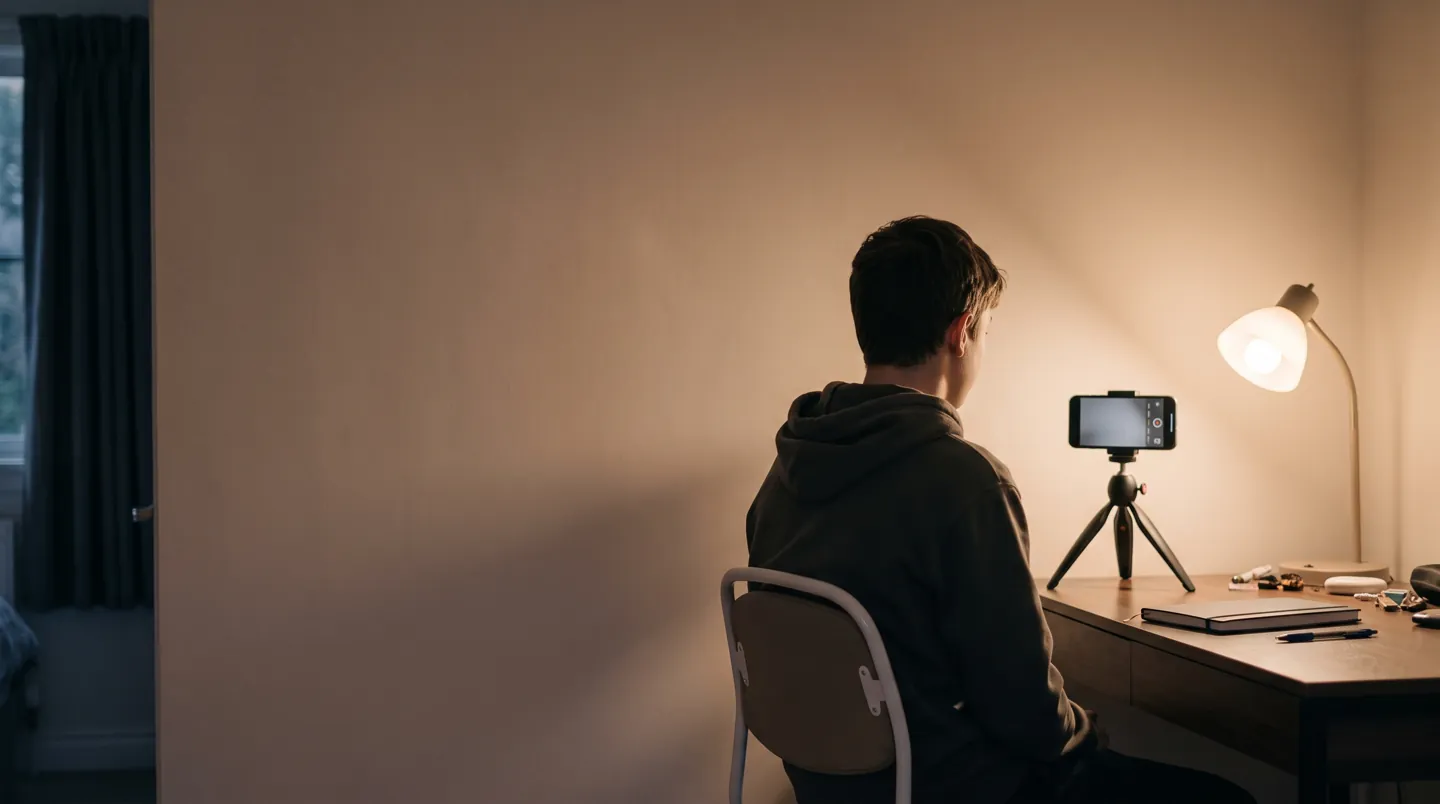
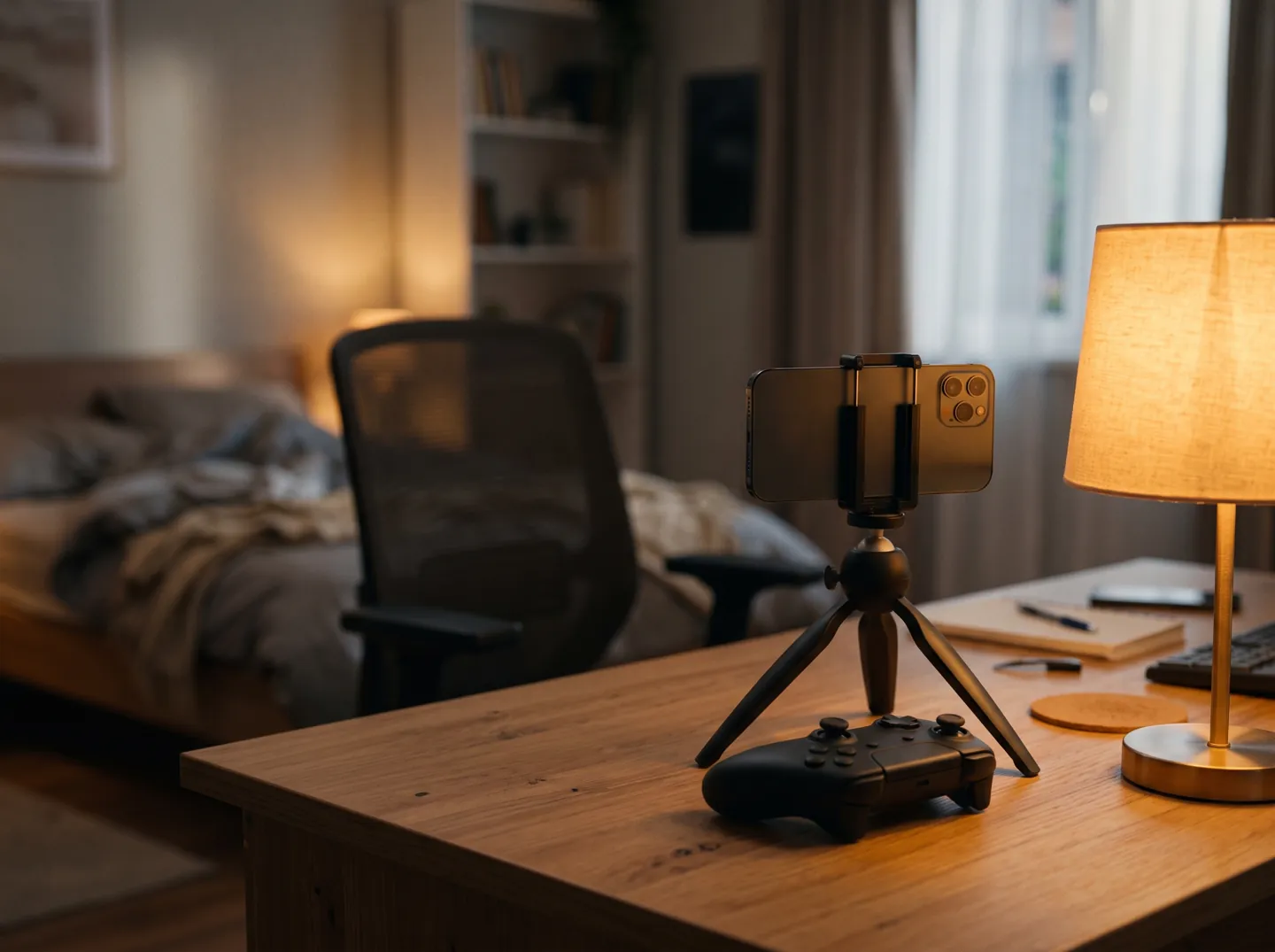
Livestreaming means broadcasting video in real time, while viewers comment, react and sometimes send gifts.
Ofcom's 2026 research found that watching livestreams is common among UK children and creating them less so, but a sizeable group of young streamers broadcast to anyone online. The NSPCC's advice centres on talking, exploring apps together and checking settings.
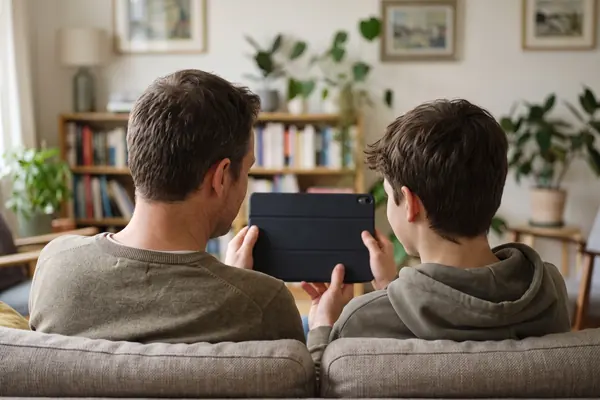
The NSPCC suggests exploring the apps your child uses together, including privacy and location settings and how to block and report, and agreeing family rules.
General information only, not professional safety advice. If someone is in immediate danger, call the emergency services.
HOW COMMON IS IT?
Watching, streaming, or both?
Pick an activity to see what share of UK children aged 8 to 17 said they did it. The bar shows how common it was.
Self-reported by 1,979 children aged 8 to 17 in an online survey for Ofcom, July to August 2025. Ofcom says to read the figures as how children answered, not verified behaviour.
TWO NUMBERS WORTH KNOWING
Fun, mostly. Not always.
Both figures are from Ofcom's survey of children who livestream.
39%
Recent child streamers who stream to anyone online or with a link
Boys were more likely to say so than girls, at 45% against 31%. Ofcom notes some children may have read the question as who watches, rather than who could.
AUDIENCE · OFCOM 2026
46%
Creators who said streaming can upset them or bring unwanted comments
Almost all creators (97%) named a positive, such as fun or being social, but 46% picked at least one of: it can make me uncomfortable, scared or worried, or bring comments I don't like.
FEELINGS · OFCOM 2026
Parents of 12% of children who had created a livestream reported a negative livestreaming-related experience in the past six months, against 5% of those who had watched one.
FOUR STEPS FROM THE NSPCC
Talk, explore, agree, check.
The NSPCC's tips for parents are practical rather than technical, and work for any app.
Talk to your child
Ask what they do online, and make sure they know they can come to you, another trusted adult or Childline on 0800 1111 if something worries them.
Explore apps together
Look at the features in the apps they use: privacy settings, location settings, and how to block and report people and comments.
Agree family rules
Decide together what is fine to share, such as hobbies, and what is not, such as age, school, address or phone number.
Check what the stream shows
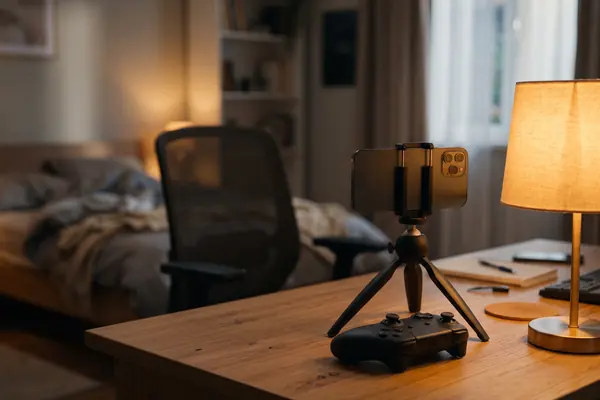
Switch location settings off, and remember the room or view behind a stream can give away where your child lives or goes to school.
AI-generated image, not a photograph of a real person or place.AI-generated image, not a photograph of a real person or place.
WHEN A STREAM IS COPIED
Live does not mean gone afterwards.
The NSPCC warns that livestreams can be recorded and shared on other sites without the streamer knowing, and comments on streams are often unmoderated. It advises reassuring children and not blaming them if something goes wrong.
If a sexual image or video of someone under 18 is shared online, Childline and the Internet Watch Foundation run Report Remove, a free, confidential way for young people in the UK to report it and get it taken down. Grooming or sexual contact can be reported to CEOP.
Questions
Questions people ask
How many children livestream?
In Ofcom's 2025 survey of 1,979 UK children aged 8 to 17, 28% said they had livestreamed their own videos and 19% had done so recently. 49% had watched a livestream live.
What age can children go live?
It depends on the platform. As of August 2025, Ofcom recorded minimum ages to go live of between 13 and 18 on major platforms, some with supervision or parental permission rules for younger teens.
What age do parents think is right?
In Ofcom's survey 70% of parents said age restrictions should apply to creating livestreams and 63% to viewing them. The median suggested ages were 16 for creating and 14 for viewing.
What are the main risks?
The NSPCC lists pressure to perform for viewers, sharing personal information, contact from strangers, unkind comments, and streams being recorded and shared without consent.
Where can we get help?
Children can call Childline free on 0800 1111. Adults can call the NSPCC helpline on 0808 800 5000. Under-18s can use Report Remove to report sexual images of themselves.